
A new phylloblattid dictyopteran—first fossil insect from the Arroyo Totoral Formation (Cisuralian, Permian) of La Rioja Province, Argentina
MARÍA B. LARA and BÁRBARA CARIGLINO
Lara, M.B. and Cariglino, B. 2026. A new phylloblattid dictyopteran—first fossil insect from the Arroyo Totoral Formation (Cisuralian, Permian) of La Rioja Province, Argentina. Acta Palaeontologica Polonica 71 (1): 19–28.
The first fossil insect from the Cisuralian (Lower Permian) Arroyo Totoral Formation, south of Sierra de los Llanos, Paganzo Basin, southeastern La Rioja Province, Argentina is reported. A new species of Phyloblattidae (Dictyoptera), Anthracoblattina macucai sp. nov., is described from an almost complete forewing and based on its general venation scheme (e.g., distinct narrowing of the strip-like costal field near wing base, widened areas between the main veins, Sc pectinated, R and M slightly sigmoidal, twigs provide fan-like covering of the wing apex, the first forks of both R and M located between the first third and the half of the wing length, CuA straight, ends at the transition of the wing tip into the posterior wing border, CuP fluently curved, broad interspace between CuP and AA, cross-venation anastomosing-striate to reticulate). Additionally, we discuss the taxonomic position of A. macucai sp. nov. in relation to other phyloblattid species described from Carboniferous–Permian South American outcrops. Finally, we analyze this new fossil “cockroachoids” within its paleofloristic context and depositional environment. A. macucai sp. nov. represents the first known Permian insect found for both the La Rioja Province and the Arroyo Totoral Formation, pointing the unit as promising for the search of fossil insects in Argentina.
Key words: Dictyoptera, Phyloblattidae, Arroyo Totoral Formation, Cisuralian, Permian, Argentina.
María B. Lara [maria.belen.lara@uda.cl; lara.maria.belen@live.com.ar; ORCID: https://orcid.org/0000-0003-1621-5594 ], Departamento de Química y Biología, Facultad de Ciencias Naturales, Universidad de Atacama, Av. Copayapu 485, Copiapó, Chile; Centro de Ecología Aplicada del Litoral (CECOAL-CONICET-UNNE), Ruta Provincial 5, km 2.5, 3400, Corrientes, Argentina.
Bárbara Cariglino [barichi10@gmail.com; ORCID: https://orcid.org/0000-0002-4346-3502 ], Museo Argentino de Ciencias Naturales “Bernardino Rivadavia” (MACN), Av. Ángel Gallardo 470, C1405DJR, Ciudad de Buenos Aires, Buenos Aires, Argentina.
Received 20 March 2025, accepted 3 December 2025, published online 19 February 2026.
Copyright © 2025 M.B. Lara and B. Cariglino. This is an open-access article distributed under the terms of the Creative Commons Attribution License (for details please see http://creativecommons.org/licenses/by/4.0/), which permits unrestricted use, distribution, and reproduction in any medium, provided the original author and source are credited.
Introduction
Even though the Permian (~299–252 Ma) paleoentomological assemblages were characterized by many relictual Carboniferous groups, they were also marked by the emergence of new insect orders (i.e., basal relatives of plecopterans, mecopterans, psocopterans, and beetles) (Grimaldi 2009). The Permian insect record derives mainly from Euramerican biotic province such as Wettin (Germany), Souss (Morocco) (upper Pennsylvanian), Obora (Czech Republic), and Elmo (Kansas, USA); Angara biotic province including Tshekarda (Urals, Russia) (lower Permian); Kaltan and Suriekovo (Kuznetsk Basin, West Siberia, Russia), and Soyana (Arkhangelsk Region, north-eastern European Russia) (upper Permian) (Schneider 1978; Rasnitsyn et al. 2015; Belahmira et al. 2019; Garrouste et al. 2025); and Gondwanan province such us Australia (Sydney Basin) (Jell 2004) and South Africa (Karoo Basin) (e.g., Pretorius et al. 2021; Prevec et al. 2022; Nel et al. 2023), followed by South America and India (Zherikhin 2002; Schlüter 2003; Ricetti et al. 2016; Nel et al. 2018).
The South American Paleozoic entomofauna is extremely diverse, comprising a total of 37 fossil insect species belonging to various groups, including palaeodictyopteroids, protodonatans, “protorthopterans”, “cockroachoids”, grylloblattids, ephemeropterans, hemipterans, miomopterans, perlapsocidans, beetles, glosselytrodeans, and permopsocidans (Lara et al. 2023). Fossil insects, represented by forewing impressions, have been collected and described from Permian outcrops in Brazil, Uruguay, and Argentina. However, compared to the Northern Hemisphere and/or its Triassic counterpart, the quantitative data available for the Permian assemblages are sparse (Lara 2016; Lara et al. 2023).
In Argentina, Permian insect records are known from the Bajo de Véliz (Paganzo Basin, San Luis Province) and Río Genoa (Tepuel Genoa Basin, Chubut Province) formations (Martins-Neto et al. 2007; Lara et al. 2023). In this article, we report and describe the first fossil insect from the lower Cisuralian (lower Permian) of the Arroyo Totoral Formation, La Rioja Province, Argentina. We erect a new species, Anthracoblattina macucai sp. nov. (Dictyoptera: Phyloblattidae), based on the venation pattern of a single forewing. In addition, we discuss the taxonomic implications of this new taxon and compare with “cockroachoids” members described from various other upper Paleozoic South American outcrops. Finally, we re-evaluate the paleoenvironmental and taphonomic conditions of the unit, previously assessed primarily on its floristic content, in light of this insect fossil. Despite being well-known by its abundant fossil flora (e.g., Cúneo 1984; Cúneo and Archangelsky 1996; Archangelsky et al. 1996), this finding reveals the Arroyo Totoral Formation as a new locality for the search of fossil insects in Argentina, adding to the paleoentomological assemblages worldwide.
Nomenclatural acts.—This published work and the nomenclatural acts it contains have been registered in ZooBank: urn:lsid:zoobank.org:pub:D02460B5-C1F9-4858-9ECB-C593373B0FD1.
Institutional abbreviations.—BAPb, Museo Argentino de Ciencias Naturales “B. Rivadavia” (MACN), Buenos Aires, Argentina; CRI-PI, “Colección de Paleoinvertebrados”, Centro Regional de Investigaciones Científicas y Transferencia Tecnológica de La Rioja (CRILAR-CONICET), Anillaco, Argentina; FC-DPI, Departamento de Paleontología de la Facultad de Ciencias, Universidad de la República del Uruguay (UdelaR), Montevideo, Uruguay; MCN.P, Museu de Ciências Naturais, Curitiba, Paraná, Brazil; UFRGS-P-I, Museu de Paleontologia do Departamento de Paleontologia e Estratigrafia da Universidade Federal do Rio Grande do Sul, Porto Alegre, Brazil.
Other abbreviations.—C, costa; CuA, anterior cubitus; CuP, posterior cubitus; l, wing length; M, media; MA, anterior media; MP, posterior media; R, radius; RA, anterior radius; RP, posterior radius; Sc, subcosta; w, wing width.
Geological setting
The Arroyo Totoral Formation (Andreis et al. 1984) crops out in the eastern sector of the Paganzo Basin, southeastern La Rioja Province, where it lies unconformably on the crystalline basement and is overlain by the Permian La Colina Formation (Limarino and Page 1999; Gutiérrez et al. 2006) (Fig. 1). According to Archangelsky et al. (1996), the Arroyo Totoral Formation is referred to the Gangamopteris Biozone of the Asselian, lower Permian, and assigned to the postglacial paleoclimatic stage with local humid conditions, subsequently changing to arid conditions during the deposition of the La Colina Formation (Limarino et al. 2014).
Fossil Locality I was established as the original stratotype (= holostratotype) for the Arroyo Totoral Formation, as defined by Andreis et al. (1984) and Cúneo (1984). The sedimentary sequence is ca. 6 m thick, and composed primarily of siltstone and claystone, representative of lacustrine facies. Intercalated within this sequence are fine- to very fine-grained sandstones deposited by suspension, and indicative of distal facies of alluvial fans. Towards the upper part of this short sequence, there is an increase of coarser, medium-grained sandstones. This suggests the development of a fluvial system with mouth bars and associated channels (Andreis et al. 1984; Cúneo 1984).
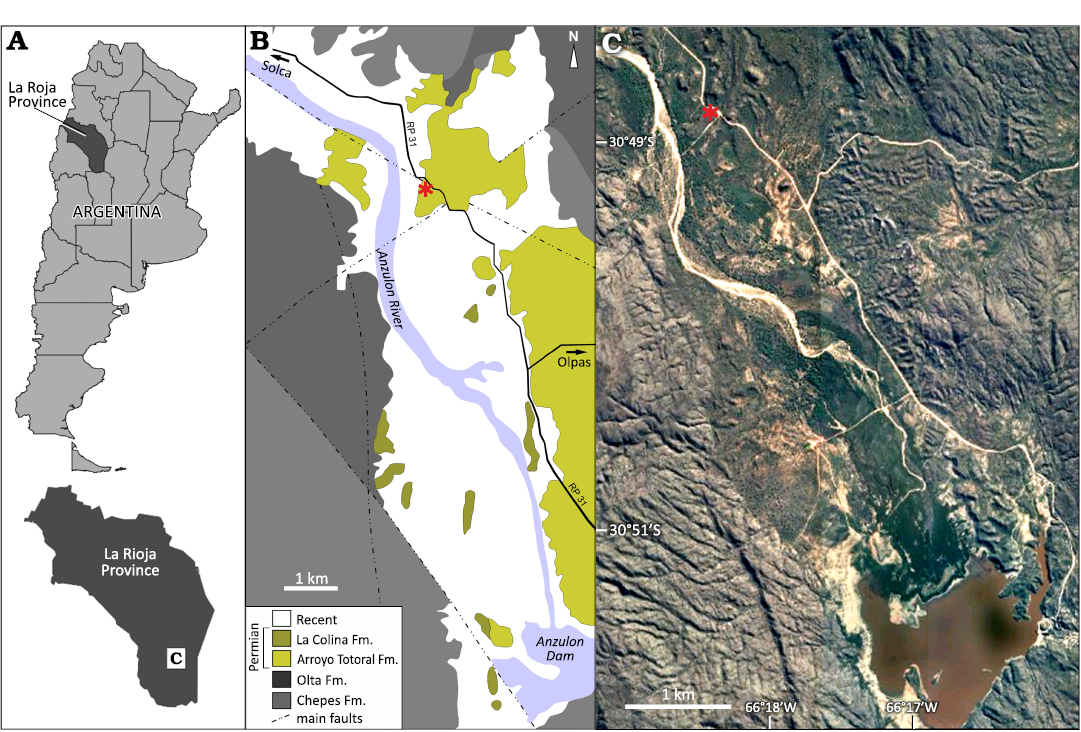
Fig. 1. A. A sketch map of Argentina and La Rioja Province. B. Generalized map of southeastern La Rioja Province showing the location of the Arroyo Totoral Formation (Asselian–Sakmarian, lower Cisuralian, Permian), south of Sierra de los Llanos, eastern sector of the Paganzo Basin. C. Aerial view of the southeastern La Rioja Province. The fossil insect site is indicated by red asterisk. Abbreviations: Fm., Formation.
Material and methods
A single cockroachoid specimen preserved as a forewing was recovered from the “Fossil Locality I” (sensu Andreis et al. 1984) of the Arroyo Totoral Formation, south of Sierra de los Llanos (30°48’29.70”S 66°18’23.91”W), Paganzo Basin, La Rioja Province, Argentina (Fig. 1). The fossil material is preserved as a compression of a single forewing in a laminated grey shale, along with several plant remains (Fig. 2) and plant-insect interactions.
The fossil was examined using a Leica M60 stereomicroscope and photographed using a Leica DMC 2900 digital camera. Different images were obtained under a combination of brightfield and incident illumination. Line drawings were prepared from a series of photographs obtained with different illumination settings under a stereomicroscope and using CorelDrawX7 software and detailed measurements were made with ImageJ software v. 1.49.
The specimen used for this study is housed at the “Colección de Paleoinvertebrados”, Centro Regional de Investigaciones Científicas y Transferencia Tecnológica de La Rioja (CRILAR-CONICET), La Rioja Province, Argentina.
The description and nomenclature of tegmen venation is based on the system established by Comstock and Needham (1898) with its emendations by Kukalová-Peck (1983) and Lameere (1922) for R (RA and RP), M (MA and MP), and Cu (CuA and CuP), regarding the specifics of blattoid wing venation pattern (Li et al. 2018). Costal field designates the area between the anterior wing margin and the subcosta (Ricetti et al. 2016).
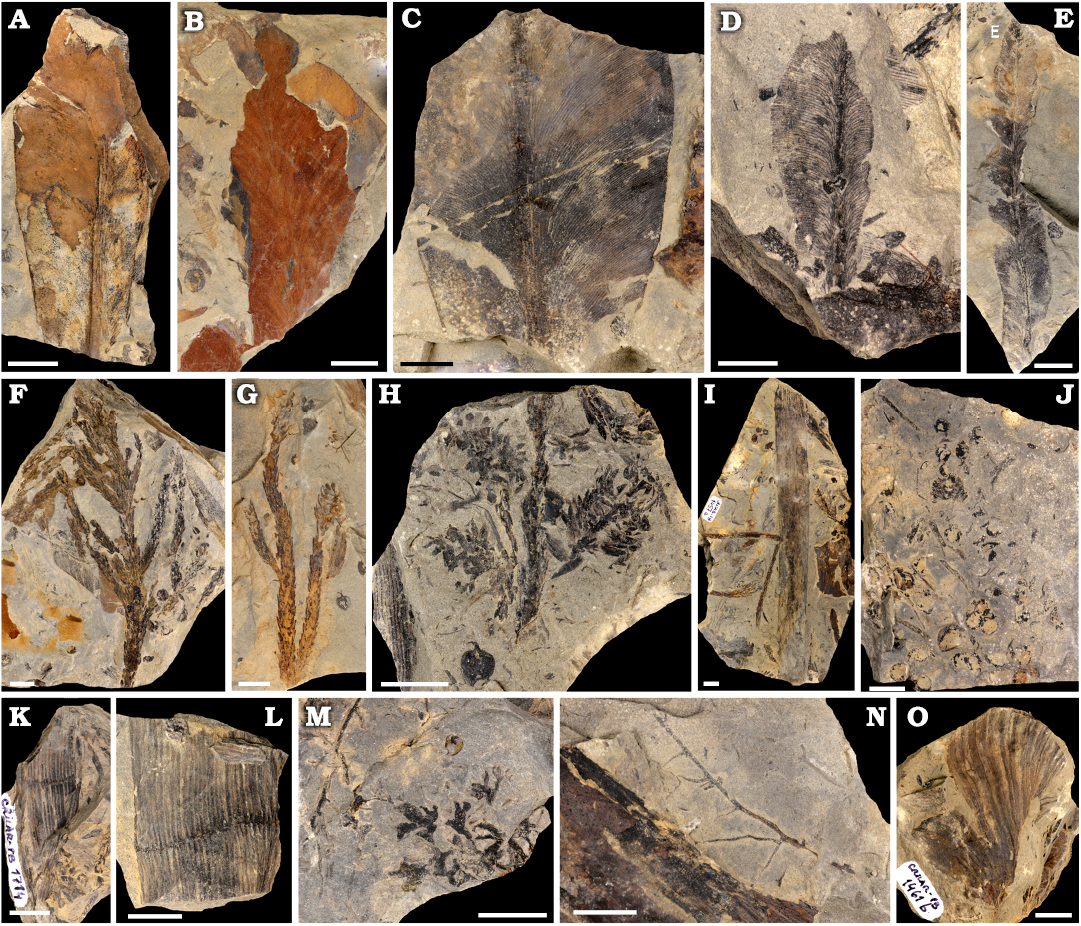
Fig. 2. Plant remains of the Arroyo Totoral Formation
(Asselian–Sakmarian, lower Cisuralian, Permian), south of Sierra de
los Llanos, eastern sector of the Paganzo Basin, La Rioja Province,
Argentina. A–E.
Glossterid leaves (A, CRILAR-PB 1479; B, CRILAR-PB 1483; C,
CRILAR-PB 1539;
D, CRILAR-PB 1519; E,
CRILAR-PB 1949). F–H.
Conifers leafy branches and cones (F,
CRILAR-PB 1410; G, CRILAR-PB 1509; H,
CRILAR-
PB 1958). I. Cordaitalean leaf and conifer
leafy branches (CRILAR-PB 1457). J. Cluster
isolated seeds (CRILAR-PB 1495). K, L. Sphenophyte stems (K,
CRILAR-PB 1714; L, CRILAR-PB 1960). M. Bryophyte indet and rootlets (CRILAR-PB
1590). N. Rootlets (CRILAR-PB 1583). O. ?Barakaria sp.
(CRILAR-PB 1461). Scale bars 10 mm.
Systematic palaeontology
Class Insecta Linnaeus, 1758
Superorder Dictyoptera Latreille, 1829
Order Blattodea Brunner von Wattenwyl, 1882
(= Blattida Latreille,
1810 = Blattaria Latreille, 1810)
Family Phyloblattidae Schneider, 1983a
Genus Anthracoblattina Scudder, 1879
Type species: Blattina spectabilis Goldenberg, 1869; Löbejün locality, Wettin Subformation, Siebigerode Formation, Stephanian C, upper Gzhelian (upper Carboniferous), Saale Basin, Germany (Schneider et al. 2021).
Stratigraphical and geographical range.—Upper Pennsylvanian (Carboniferous) to Cisuralian (lower Permian) of Europe, North Africa (Morocco), India (Kashmir), South America (Argentina, Brazil), USA, and Russia.
Anthracoblattina macucai sp. nov.
Fig. 3
Zoobank LSID: urn:lsid:zoobank.org:act:D02460B5-C1F9-4858-9ECB -C593373B0FD1.
Etymology: In reference to the “Macuca Team”, name of the research group that participated at paleontological prospections and collections in the La Rioja Province (Argentina).
Holotype: CRI-PI 1, impression (compression) of a nearly complete single forewing.
Type locality: “Fossil Locality I” (sensu Andreis et al. 1984) of the south of Sierra de los Llanos, Paganzo Basin, La Rioja Province, Argentina.
Type horizon: Arroyo Totoral Formation, lower Lower Permian.
Material.—Type material only.
Diagnosis.—Elongated forewing, approximately 17.5 mm in length preserved (22–23 mm length estimated). Costal field elongate, narrow, wedge-shaped. Sc (pectinated) with 11 branches simple (inclined apically, parallel each other) and distal branch fork, branches arising at an angle of about 23–35° from the Sc stem, ending at anterior wing margin. R forked before to M bifurcation (distance 1.47 mm), into a two times forked RA and a multiple forked RP, terminating at the transition of the anterior wing border to the wing tip (reconstructed) (Fig. 3B). M forked into MA and MP (stem MA and MP of sub-equal length) with altogether minimally 5 preserved twigs), covering a narrow area, at the wing apex. CuA runs more or less straight toward the transition of the wing tip into the posterior wing margin. The first six posteriorly pectinate, partially forked twigs arise by branching from CuA stem. As far as preserved it follow a bifurcation. CuA altogether with about 10 branches covering the posterior wing border up into the transition to the wing tip. CuP as far as preserved in the basal part gently curved, apical part straighter. Crossveins (archedictyon) mainly straight, polygonal reticulate to anastomosing striate. Coloration monochromatic, probably pale brown.
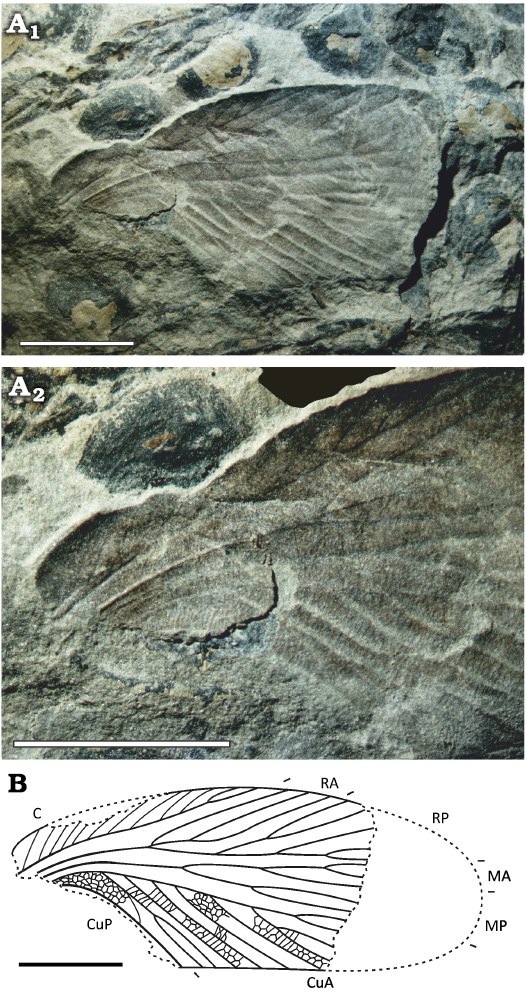
Fig. 3. Phyloblattid dictyopteran Anthracoblattina macucai sp. nov., Arroyo Totoral Formation (Asselian–Sakmarian, lower Cisuralian, Permian), La Rioja Province, Argentina. A. Photographs of the holotype (CRI-PI 1), part of the forewing (A1), basal part of the forewing showing the crossveins (A2). B. Interpretation of wing venation with veins labelled. Scale bars 2 mm. Abbreviations: C, costa; CuA/P, anterior/posterior cubitus; MA/P, anterior/posterior media; RA/P, anterior/posterior radius.
Description.—One nearly complete isolated forewing, elongate ellipsoidal (Fig. 3), length 17.5 mm (reconstructed forewing size about 22–23 mm), maximum width 8.85 mm, l/w 1.97. Costal field elongate and narrow, wedge-shaped (wide at the base but narrows apically) covering about 70% of the wing length preserved, narrower toward to the apical margin. Sc, R, M, and Cu strongly sclerotized at the wing base and bifurcate posteriorly into multiple branches. Sc stem well-developed, anteriorly pectinate with 11 branches inclined apically, parallel each other, regularly spaced; nearly all branches simple (one Sc branch dichotomized), reaching the anterior of the wing tip on the anterior wing margin. R stem gently curved, nearly straight, forking into RA and RP ca. 0.56 mm distad wing base, basally fork of M (distance 1.47 mm), into RA and RP, apparently crossing the entire length of the wing and reaching the wing margin at the transition of the anterior wing border to the wing tip. RA with at least three branches and RP with at least five branches, ending at the wing apex. M stem ca. 0.67 mm distad wing base, besides the basal bending, nearly straight, directed anteriorly, with at least five branches straight or slightly arched, and covering a narrow area (from the wing tip to the transition between wing tip and posterior wing margin). MA and MP stems of sub-equal length: 4.14 mm and 3.58 mm, respectively. CuA stem ca. 0.26 mm distad wing base, slightly sigmoidal inclined and more or less straight toward the posterior wing margin; posteriorly pectinate, with seven terminal branches ending at posterior margin of wing, three being bifurcated (at least 10 branches): the first CuA branch forked followed by four simple branches and then by two forked branches. CuP simple, basal part gently curved and apical part straighter. Anal veins not preserved. Crossveins (archedictyon) observed mainly in basal and middle area of wing: straight, reticulate to anastomosing striate. Main veins dark, appearing black when compared with rest of wing. Coloration monochromatic, probably pale brown.
Stratigraphic and geographic range.—Type locality and horizon only.
Discussion
Taxonomic implications.—Numerous cockroach-like Paleozoic and Mesozoic fossils (also called “cockroachoids”), a group well-known for its problematic taxonomy under the extant superorder Dictyoptera Leach, 1815, have been recorded in different outcrops worldwide (Legendre et al. 2015; Dvořák et al. 2022; Nel et al. 2022).
Based on the forewing venation pattern, the new species described herein, Anthracoblattina macucai sp. nov., shows the diagnostic characters of the family Phyloblattidae Schneider, 1983a, such as: costal field elongated and comparatively narrow apically, widened areas between the main veins (e.g., Sc, R), Sc pectinated, with branches mostly simple and nearly straight, R slightly sigmoidal divided into RA and RP, M slightly sigmoidal forked into MA and MP, twigs provide fan-like covering of the wing apex, CuA slightly curved, ends at the transition of the wing tip into the posterior wing border, CuP curved, and cross-venation anastomosing-striate to reticulate (Schneider 1983a). Phyloblattidae Schneider, 1983a, a predominantly Paleozoic “cockroachoid” group, has been recorded from strata of Pennsylvanian–Permian (late Moscovian–?Lopingian) age from Europe, North America, North Africa, Siberia, China, South America, and South Africa (Schneider 1983a; Belahmira et al. 2019; Schneider et al. 2021). However, the phyloblattids seemingly almost disappeared from the fossil record after the Permian/Triassic boundary, persisting as a reduced taxonomic group in ecosystems up to the Early Cretaceous, e.g., Pozabudnutie antiquorum Vršanský et al., 2023 from Cretaceous Myanmar amber (Vršanský 2003, 2010, Vršanský et al. 2023). The cockroaches Mesozoic Gondwanan localities are very sparse and do not contain phyloblattids (e.g., Vršanský 2008; Lee 2016; Martin 2020; Lara et al. 2023, Vršanský 2024).
The taxonomic position of the new Argentinian fossil under the genus Anthracoblattina Scudder, 1879, is supported by the shape and size of the forewing (i.e., an elongate ellipsoidal forewing, up to 50 mm length), costal field size (about 70–75% of forewing length), a distinct narrowing of the strip-like costal field, Sc with pectinate branches inclined apically (some branches forked), first forks of both R and M located between the first third and the half of the wing length, R weakly sigmoidal, with branches terminating anterior of the wing tip on the anterior wing margin, M divided behind the first fork of the R stem, branches covering an area extending from the wing tip to the transition between wing tip and posterior wing margin, CuA slightly curved at base then runs straight toward the posterior wing margin, basal part of CuP gently curved, apical part straighter, broad interspace between CuP and AA, and crossveins reticulate and/or anastomosing-striate (Schneider 1983a,b; Schneider et al. 2021; Ricetti et al. 2016; Belahmira et al. 2019).
Both Phyloblatta and Anthracoblattina species are difficult to distinguish due to the high degree of individual and intraspecific variability (Belahmira et al. 2019; Jörg W. Schneider personal communication 2025). In addition to this morphologic variability, Anthracoblattina is further complicated in taxonomic issues by the fact that it seems to be the most conservative phyloblattid genus of the late Paleozoic (Jörg W. Schneider personal communication 2025). Given the high degree of individual variability, in this paper, we prefer to attribute this specimen to a new species, A. macucai sp. nov., until further well-preserved blattoid specimens become available from the Arroyo Totoral Formation, La Rioja Province, Argentina.
Comparison to other Paleozoic stem-dictyopterans records in South America.—Previous South American records of Paleozoic stem-dictyopterans come from Brazil, Uruguay, and Argentina, and are mainly referred to family Phyloblattidae Schneider, 1983a (Table 1). In Brazil, stem-dictyopteran fossils represented by the genus Anthracoblattina Scudder, 1879, and Phyloblatta Handlirsch, 1906, were recovered from the Passinho Shale, upper section of the ?Taciba Formation (Asselian, Cisuralian, Permian) and the Lontras Shale (“Lontras Shale fossillagerstätte”), uppermost section of the Campo Mourão Formation (Pennsylvanian–Cisularian) (Table 1, Fig. 4A) (Ricetti et al. 2012, 2016; Ricetti 2016). In Uruguay, Calisto and Piñeiro (2019) described Barona arcuata Calisto & Piñeiro, 2019, a single left “cockroachoid” forewing from the Mangrullo Formation (Gzhelian–Asselian, Pennsylvanian–Cisularian), also considered an “ancient Konservat-Lagerstätte” in the Paraná Basin, Cerro Largo Department (Piñeiro 2004) (Fig. 4B). Furthermore, Calisto (2018) and Calisto et al. (2022) described other specimens collected in the Mangrullo Formation, some of which have also been identified as belonging to stem-Dictyoptera. In Argentina, only two species of Paleozoic “cockroachoid” were described, both from the Río Genoa Formation (lower Permian, Tepuel Genoa Basin, Chubut Province): Anthracoblattina archangelskyi Pinto & Mendes, 2002 (Fig. 4C) and Archangelskyblatta vishniakovae Pinto, 1972 (Fig. 4D) (Phyloblattidae, Dictyoptera) (Table 1) (Pinto 1972; Pinto and Mendes 2002; Ricetti et al. 2016; Lara et al. 2023).
Table 1. A list of “cockroachoids” described from the Permian of South America.
|
Family |
Species |
Type material |
Horizon |
Locality |
Reference |
|
Phyloblattidae |
Archangelskyblatta vishniakovae Pinto, 1972 |
BAPb 562 |
Río Genoa Formation (lower Permian), Tepuel Genoa Basin |
Chubut, |
|
|
Phyloblattidae |
Anthracoblattina
archangelskyi |
BAPb 640 |
Río Genoa Formation (lower Permian), Tepuel Genoa Basin |
Chubut, |
Pinto and Mendes 2002; Ricetti et al. 2016; Belahmira et al. 2019 |
|
Phyloblattidae |
Anthracoblattina macucai sp. nov. |
CRI-PI 1 |
Arroyo Totoral Formation |
La Rioja, |
this paper |
|
Spiloblattidae |
Aissoblatta sp. |
|
Iratí/Serra Alta formations |
São Paulo, Brazil |
|
|
Phyloblattidae |
Anthracoblattina oliveirai Carpenter, 1930 |
DGM-389-I |
Passinho Shales, upper section
|
Teixeira Soares, Paraná, Brazil |
|
|
Phyloblattidae |
Anthracoblattina
langei Pinto & |
DNPM 2981-I |
Passinho Shales, upper section
|
Teixeira Soares, Paraná, Brazil |
|
|
Phyloblattidae |
Anthracoblattina mendesi Pinto & Sedor, 2000 |
MCN.P. 218 |
Lontras Shale, upper section
Upper Campo Mourão Formation |
Mafra, Santa Catarina, Brazil |
|
|
Phyloblattidae |
Phyloblatta
roxoi |
Universidade de Sao Paulo 205 (hindwing) |
Passinho Shales, upper section
|
Teixeira Soares, Paraná, Brazil |
|
|
Phyloblattidae |
Phyloblatta pauloi Mezzalira, 1948 |
DNPM 3911-I |
Passinho Shales, upper section
|
Teixeira Soares, Paraná, Brazil |
|
|
Phyloblattidae |
Phyloblatta sommeri Pinto & Purper, 1979 |
DNPM 2982-I |
Passinho Shales, upper section
|
Teixeira Soares, Paraná, Brazil |
|
|
Family indet. |
Barona arcuata Calisto & Piñeiro, 2019 |
FC-DPI 8710 |
Mangrullo Formation |
Estancia “El Barón” locality,
Cerro |
Anthracoblattina macucai sp. nov. shows similarities with Archangelskyblatta vishniakovae Pinto, 1972, in the forewing size (19–20 mm vs. 20 mm) and morphology of the Sc, M, and CuA, but differs from the latter in R forking before at middle length, development of R, M forking after R, and the first branch of CuA bifurcated (Fig. 4D). Moreover, A. macucai sp. nov. can be distinguished from other Carboniferous–Permian South American “cockroachoid” such as Barona arcuata (Fig. 4B), Phyloblatta roxoi Petri, 1945, Phyloblatta sommeri Pinto & Purper, 1979, Phyloblatta pauloi Mezzalira, 1948 (Passinho Shale, upper section ?Taciba Formation, lower Permian, Itararé Group, Brazil; Table 1) in the forewing size (19–20 mm vs. 22–33 mm) and scarce development of Sc, RA, RP, MA, MP, CuA.
In comparison with other Carboniferous–Permian species of Anthracoblattina Scudder, 1879, described from different South American outcrops (Table 1), A. macucai sp. nov. exhibits some morphological differences. The new species differs from A. archangelskyi Pinto & Mendes, 2000 (Río Genoa Formation, lower Permian, Tepuel Genoa Basin, Argentina) (Fig. 4C) by Sc branches short, first branch of RA simple, arising close to bifurcation of R, MA, and MP stems of sub-equal length, first and the two last branches of CuA forked. Likewise, A. macucai sp. nov. is distinguished from Anthracoblattina mendesi Pinto & Sedor, 2000 (Lontras Shale, Campo Mourao Formation, Asselian, Itararé Group, Paraná Basin, State of Santa Catarina, Brazil) (Fig. 4A) in forewing size (19–20 mm vs. 42 mm), Sc shape, with 12 pectinate branches, mostly branches simple (the last branch bifurcated), R bifurcated in RA and RP distal of the M forked (1.47 mm), RA and RP with a smaller amount branches (3 and 5, respectively), RA with simple branches, stem MA shorter (vs. MA with a long basal stem), MA and MP (stems of sub-equal length) with fewer branches (3 and 2, respectively), CuA with about 10 branches covering the posterior wing margin (vs. about 13 branches in A. mendesi) (Ricetti 2016; Ricetti et al. 2016). Also, A. macucai sp. nov. can be separated from Anthracoblattina oliveirai Carpenter, 1930, and Anthracoblattina langei Pinto & Purper, 1979 (Passinho Shales, upper section ?Taciba Formation, lower Permian, Itararé Group, Brazil) in the shorter size (19–20 mm vs. 27 mm in A. oliveirai), Sc branches short and simple (in A. oliveirai and A. langei two bifurcated veins), RA with simple branches, the first branch of RA simple, arises close to bifurcation of R, less branches of RA (3 branches vs. 5–6 branches in A. oliveirai and A. langei) and M (5 branches vs. 7 branches in A. oliveirai and A. langei), almost similar length of MA and MP stem, distance between bifurcation of R and M, the first branch of CuA bifurcated (in A. oliveirai simple) (Pinto and Mendes 2002; Ricetti 2016; Ricetti et al. 2016).
Despite the comparisons of A. macucai sp. nov. with the above-mentioned Paleozoic stem-dictyopteran records from South America, we agree with previous statements that taxonomic redescriptions and new illustrations, including morphological notes and photographs, are needed, as noted by Ricetti (2016) and Riccetti et al. (2016).
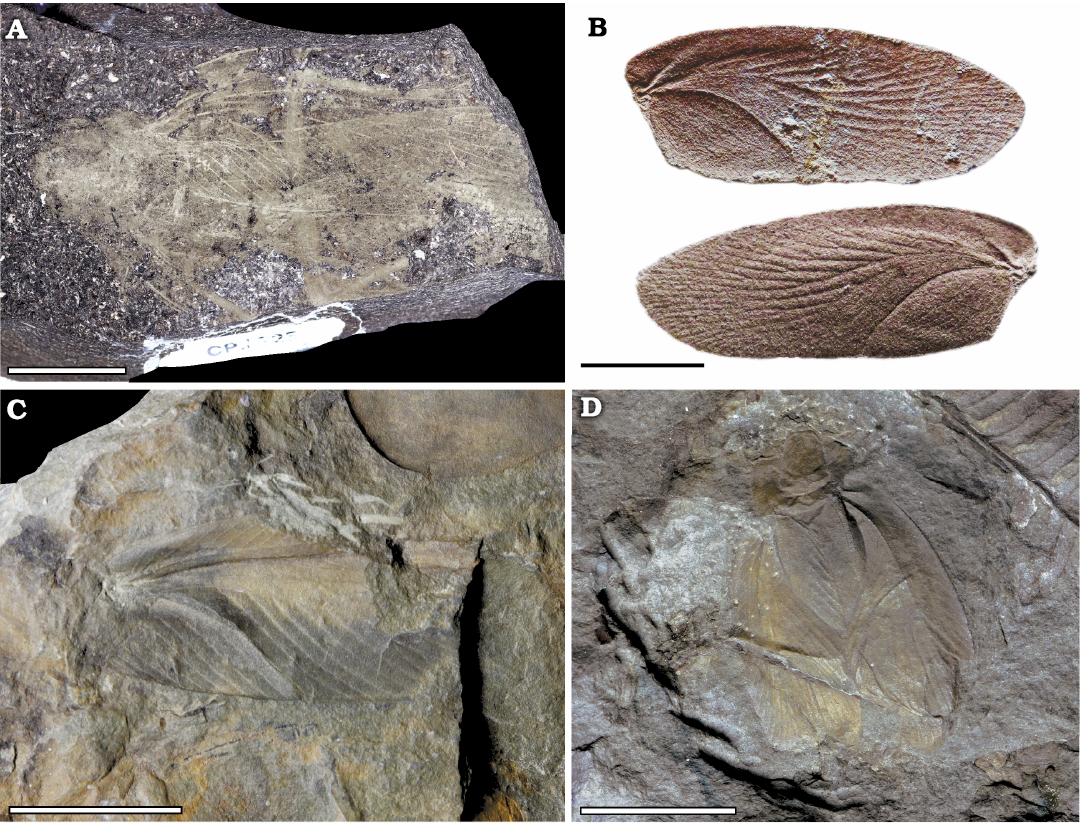
Fig. 4. Phyloblattid dictyopterans from South America. A. Anthracoblattina mendesi Pinto & Sedor, 2000 (Phyloblattidae, Dictyoptera), holotype MCN.P. 218, Lontras Shale, Campo Mourao Formation (Asselian, Cisuralian, Permian), Itararé Group, Paraná Basin, State of Santa Catarina, Brazil (photo by L.F. Pereira Lopes and J.H.Z. Ricetti). B. Barona arcuate Calisto & Piñeiro, 2019 (Family indet., Dictyoptera), holotype FC-DPI 8710, Mangrullo Formation (Gzhelian–Asselian, upper Pennsylvanian–lower Cisuralian) Paraná Basin, Cerro Largo Department, Uruguay (photo by G. Piñeiro and V. Calisto). C. Anthracoblattina archangelskyi Pinto & Mendes, 1972 (Phyloblattidae, Dictyoptera), holotype BAPb 640, Río Genoa Formation, Tepuel Genoa Basin, Chubut Province, Argentina. D. Archangelskyblatta vishniakovae Pinto, 1972 (Phyloblattidae, Dictyoptera), holotype BAPb 562, UFRGS-P-I-4202, Río Genoa Formation (Sakmarian–Artinskian?, middle Cisuralian), Tepuel Genoa Basin, Chubut Province, Argentina. Scale bars 10 mm.
Paleoecological and taphonomic implications.—Anthra coblattina macucai sp. nov. (Dictyoptera: Phyloblattidae) was recovered from the Arroyo Totoral Formation alongside a rich paleoflora, comprising glossopterids (Gangamopteris and Glossopteris), conifers (Ferugliocladus), cordaitaleans (Cordaites), sphenophytes (Phyllotheca, Paracalamites), pteridosperms (Botrychiopsis) ginkgoaleans (Ginkgoites), bryophytes, abundant dispersed seeds (Fig. 2), and additional, less noticeable flora, including ferns, lycophytes, and various reproductive structures.
The state of preservation of the fossils is varied; most of the plant specimens are fairly large or complete (e.g., Fig. 2A–D), delicate (e.g., Fig. 2H, M) and articulated (e.g., Fig. 2F, G, I); although in some cases, they exhibit moderate degradation (e.g., Fig. 2D, E, H, O). This indicates a short distance of transport from the origin to deposition, suggesting the flora of the Arroyo Totoral area was growing near the water body under humid local climatic conditions. The presence of rootlets (Fig. 2N) further points to the development of paleosols and a parautochthonous assemblage. Accordingly, the flora from the Arroyo Totoral Formation is inferred to have grown at the lake’s shore, where it was later deposited in lacustrine facies (Cúneo 1984; Andreis et al. 1984; Cúneo and Archangelsky 1996).
Given the abundantly well-preserved paleoflora, and the historical number of excavations at the site, the conspicuous lack of insects in this unit challenges our understanding. The presence of a varied paleoentomofauna living in the vegetation is inferred from the numerous plant-insect interactions registered, including generalized herbivory (Pinheiro et al. 2015), piercing and sucking, galling, and oviposition (BC unpublished data). Nonetheless, none of the herbivory traces can be attributed to A.macucai sp. nov., since it probably lived on the ground of vegetated areas, protected from predators and functioning as an organic-matter degrader (detritivores). However, the possibility of it having a predator role cannot be excluded (Vršanský 2024; Santos et al. 2025). Schneider (1983a) mentioned that Anthracoblattina Scudder, 1879, had a limited habitat preference, being more abundant in sparsely vegetated shores of lakes and seas (Belahmira et al. 2019). Regarding the oviposition traces, none were identified as exophytic. Besides, the arrangement of the observed ovipositions on sphenophyte stems and glossopterid foliage (BC unpublished data) differed from the stereotyped curved arcs that have been attributed to other Paleozoic “cockroachoids” (Laaß and Hauschke 2019), the former being likely produced by protodonatans, Protophasmatidae, or Palaeodictyoptera (i.e., Cariglino et al. 2021).
The tegmina of “cockroachoids” (as well as those of other insects, such as hemipterans and elytra beetles) represent a common element in the fossil record. The tegmina are hardened forewings with a leathery appearance, therefore having a higher preservation potential, unlike the more delicate second pair of wings (Karr and Clapham 2015). This reinforces the puzzling absence of other insect remains in the Arroyo Totoral Formation, though collection and taphonomic biases remain possible. Nonetheless, in the Lower Cretaceous Khasurty locality (Russia), the cockroaches are completely absent despite the collection of thousands of fossil insects (Kopylov et al. 2020). Ricetti (2016) mentioned that large-winged blattoid insects such as Anthracoblattina Scudder, 1879, were one of the most common insects in neocarboniferous-eopermian entomofaunas, both in Euramerica and South America (Lara et al. 2023). However, when compared with other “cockroachoid” genera, Anthracoblattina Scudder, 1879, comprise a frequent element recorded in nearly all late Paleozoic blattoid-dominated entomofaunas (Jörg W. Schneider, personal communication 2025).
Conclusions
In this paper, Anthracoblattina macucai sp. nov. is described as a new species of stem-dictyopteran. The taxonomic position within family Phyloblattidae Schneider, 1983a, and the genus Anthracoblattina Scudder, 1879, is based on a combination of numerous characters observed from an incomplete forewing.
Anthracoblattina macucai sp. nov. (Dictyoptera: Phyloblattidae) represents the first Permian record in La Rioja Province (Argentina), being a remarkable finding since the entomological records in South American late Paleozoic deposits are very scarce in comparison to the Northern Hemisphere. We believe that future paleontological work in this formation will greatly expand our knowledge of early insect diversity.
Acknowledgments
We are grateful to Secretaría de Culturas of La Rioja province for permits. María Lucía Balarino, Daniela Ruiz, Lautaro Ruffo-Rey (all MACN-CONICET) and Sebastian Mirabelli (CRILAR-CONICET) are thanked for helping in the field and their constant friendship. We would like to thank Luiz Flávio Pereira Lopes (Porto Alegre, Brazil), João Henrique Zahdi Ricetti (Centro de Pesquisas Paleontológicas, Universidade do Contestado, Mafra, Brazil), Graciela Piñeiro (Departamento de Paleontología, Facultad de Ciencias, Montevideo, Uruguay), and Viviana Calisto (Montevideo, Uruguay) for sharing photos of the Brazilian and Uruguayan Paleozoic insects, respectively. We would like to express our sincere gratitude to Jörg W. Schneider (Geologisches Institut, Departament Paleontology and Stratigraphy, Freiberg, Germany) for taking the time to read our manuscript and for providing valuable comments. His insights enriched and significantly contributed to improving the quality of this work. We also thank two anonymous reviewers for their careful review that greatly improved the first version of the manuscript. This research was partly supported by grants ANPCyT PICT2021-00155 (PI: B.C) and PUE0098 (MACN); and Fondecyt de Iniciación, Grant N°11251643, ANID, Chile (M.B.L).
Editor: Andrzej Kaim
References
Andreis, R., Cúneo, R., and Rolón, A.D. 1984. Definición formal de los estratos de Arroyo Totoral, Pérmico Inferior, Sierra de Los Llanos, provincia de La Rioja. 9° Congreso Geológico Argentino (Bariloche, Argentina), Actas 4: 318–336.
Archangelsky, S., Ascuy, C.L., Césari, S.N., González, C.R., Hünicken, M.A., Mazzoni, A., and Sabattini, N. 1996. Correlación y edad de las biozonas. In: S. Archangelsky (ed.)., El Sistema Pérmico en la República Argentina y en la República Oriental del Uruguay, 203–226. Academia Nacional de Ciencias, Córdoba, Argentina.
Aristov, D.S., Bashkuev, A.S., Golubev, V.K., Gorochov, A. V., Karasev, E.V., Kopylov, D.S., Ponomarenko, A.G., Rasnitsyn, A.P., Rasnitsyn, D.A., Sinitshenkova, N.D., Sukatsheva, I.D., and Vassilenko, D.V. 2013. Fossil insects of the Middle and Upper Permian of European Russia. Paleontological Journal 47: 641–832. Crossref
Belahmira, A., Schneider, J.W., Scholze, F., and Saber, H. 2019. Phyloblattidae and Compsoblattidae (Insecta, Blattodea) from the late Carboniferous Souss basin, Morocco. Journal of Paleontology 93: 945–965. Crossref
Brunner von Wattenwyl, C. 1882. Prodromus der Europäischen Orthopteren. 466 pp. Verlag von Wilhelm Engelmann, Leipzig.
Calisto, V. 2018. Paleontomofauna del Paleozoico Superior de Uruguay. 91 pp. Tesis de Maestría, Universidad de la República, PEDECIBA, Montevideo.
Calisto, V. and Piñeiro, G. 2019. A large cockroach from the mesosaur-bearing Konservat-Lagerstätte (Mangrullo Formation), Late Paleozoic of Uruguay. PeerJ 7: e6289. Crossref
Calisto, V., Piñeiro, G., and Lara, M.B. 2022. Late Paleozoic Insects from the Konservat-Lagerstätte Mangrullo Formation, Paraná Basin, Uruguay. 94. Reunión de Comunicaciones de la Asociación Paleontológica Argentina, Salta.
Cariglino, B., Moisan, P., and Lara, M.B. 2021. The fossil record of plant-insect interactions and associated entomofaunas in Permian and Triassic floras from southwestern Gondwana: A review and future prospects. Journal of South American Earth Sciences 111: 103512. Crossref
Carpenter, F.M. 1930. Um blattide Permiano do Brasil. SGB/CPRM 50: 1–11.
Comstock, J.H. and Needham, J.G. 1898. The wings of insects. American Naturalist 32: 43–48. Crossref
Cúneo, N.R. 1984. Primeros resultados fitopaleoecológicos de La Formación Arroyo Totoral, Pérmico Inferior de La Rioja, Argentina. IX Congreso Geológico Argentino, Actas 4: 318–336.
Cúneo, N.R. and Archangelsky, A. 1996. Nuevos resultados fitopaleoecológicos de la Formación Arroyo Totoral, Pérmico inferior, provincia de La Rioja. Ameghiniana 32: 145–154.
Dvořák, T., Krzemiński, W., and Prokop, J. 2022. New stem-dictyopteran insects from the Pennsylvanian deposits at Mazon Creek and Sosnowiec (Insecta: Polyneoptera). Historical Biology 35: 2334–2339. Crossref
Garrouste, R., Boderau, M., and Nel, A. 2025. New roachoids (Dictyoptera: Spiloblattinidae) from the “red” Permian of Gonfaron (Southern France). Historical Biology 37: 1639–1644. Crossref
Goldenberg, C.F. 1869. Zur Kenntniss der fossilen Insecten in der Steinkohlen-Formation. Neues Jahrbuch für Mineralogie, Geologie und Paläontologie 1869: 158–168.
Grimaldi, D. 2009. Fossil record. In: V.H. Resh and R.T. Cardé (eds.), Encyclopedia of Insects, 396–403. Elsevier, San Diego. Crossref
Gutiérrez, P.R., Ottone, E.G., and Japas, S.M. 2006. Léxico Estratigráfico de la Argentina. Volumen VII. Pérmico. 368 pp. Asociación Geológica Argentina, Serie B (Didáctica y Complementaria) 28, Buenos Aires.
Handlirsch, A. 1906. Revision of American Paleozoic insects. Proceedings of the United States National Museum 29: 661–820. Crossref
Karr, J.A. and Clapham, M.E. 2015. Taphonomic biases in the insect fossil record: shifts in articulation over geologic time. Paleobiology 41: 16–32. Crossref
Kopylov, D.S., Rasnitsyn, A.P., Aristov, D.S., Bashkuev, A.S., Bazhenova, N.V., Dmitriev, V.Y., Gorochov, A.V., Ignatov, M.S., Ivanov, V.D., Khramov, A.V., Legalov, A.A., Lukashevich, E.D., Mamontov, Y.S., Melnitsky, S.I., Ogłaza, B., Ponomarenko, A.G., Prokin, A.A., Ryzhkova, O.V., Shmakov, A.S., Sinitshenkova, N.D., Solodovnikov, A.Y., Strelnikova, O.D., Sukacheva, I.D., Uliakhin, A.V., Vasilenko, D.V., Wegierek, P., Yan, E.V., and Zmarzły, M. 2020. The Khasurty fossil insect Lagerstätte. Paleontological Journal 54: 1221–1394. Crossref
Kukalová-Peck, J. 1983. Origin of the insect wing and wing articulation from the arthropodan leg. Canadian Journal of Zoology 61: 1618–1669. Crossref
Jell, P.A. 2004. Fossil insects of Australia. Memoirs of the Queensland Museum 50: 1–123.
Laaß, M. and Hauschke, N. 2019. Earliest record of exophytic insect oviposition on plant material from the latest Pennsylvanian (Gzhelian, Stephanian C) of the Saale Basin, Germany. Palaeogeography, Palaeoclimatology, Palaeoecology 534: 109337. Crossref
Lameere, A. 1922. Sur la nervation alaire des Insectes. Bulletin de la Classe des Sciences de l’Académie Royale de Belgique 8: 138–149.
Latreille, P.A. 1810. Considérations générales sur l’ordre naturel des animaux composant les classes des Crustacés, des Arachnides et des Insectes avec un tableau méthodique de leurs genres disposés en familles. 444 pp. Schoell, Paris. Crossref
Latreille, P.A. 1829. Le règne animal distribué d’après son organisation, pour servir de base à l’histoire naturelle des animaux et d’introduction à l’anatomie comparée. Nouvelle édition, revue et augmentée. Tome IV. Crustacés, arachnides et partie des insectes. 584 pp. Déterville, Crochard, Paris.
Lara, M.B. 2016. La entomofauna triásica del Cerro Cacheuta (Cuenca Cuyana): estudio sistemático, paleoecológico y su relación con otras asociaciones coetáneas. 398 pp. Ph.D. Thesis, Facultad de Ciencias Exactas, Físicas y Naturales, Universidad Nacional de Córdoba, Córdoba.
Lara, M.B., Cariglino, B., and Zavattieri, M. 2023. Late Paleozoic–Early Mesozoic insects: state of the art on Paleoentomological studies in southern south America. Ameghiniana 60: 418–449. Crossref
Leach, W.E. 1815. Entomology. In: D. Brewster (ed.) Edinburgh Encyclopædia, Volume IX, 57–172. William Blackwood, Edinburgh.
Lee, S.W. 2016. Taxonomic diversity of cockroach assemblages (Blattaria, Insecta) of the Aptian Crato Formation (Cretaceous, NE Brazil). Geologica Carpathica 67: 433–450. Crossref
Legendre, F., Nel, A., Svenson, G.J., Robillard, T., Pellens, R., and Grandcolas, P. 2015. Phylogeny of Dictyoptera: dating the origin of cockroaches, praying mantises and termites with molecular data and controlled fossil evidence. PLOS ONE 10 (7): e0130127. Crossref
Li, X.R., Zheng, Y.H., Wang, C.C., and Wang, Z.Q. 2018. Old method not old-fashioned: parallelism between wing venation and wing-pad tracheation of cockroaches and a revision of terminology. Zoomorphology 137: 519–533. Crossref
Linnaeus, C. 1758. Systema naturæ per regna tria naturæ, secundum classes, ordines, genera, species, cum characteribus, differentiis, synonymis, locis. Tomus I. Editio decima, reformata. 824 pp. Laurentius Salvius, Stockholm. Crossref
Limarino, C.O. and Page, S. 1999. Hoja Geológica 3166-I, Chamical, La Rioja y San Juan, escala 1:250000. Servicio Geológico Nacional, Boletín 257: 1–102.
Limarino, C.O., Césari, S.N., Spalletti, L.A., Taboada, A., Isbell, J.L., Geuna, S., and Gulbranson, E.L. 2014. A paleoclimatic review of southern South America during the late Paleozoic: A record from icehouse to extreme greenhouse conditions. Gondwana Research 25: 1396–1421 Crossref
Martin, S.K. 2010. Early Jurassic cockroaches (Blattodea) from the Mintaja insect locality, Western Australia. Alavesia 3: 55–72.
Martins-Neto, R.G., Gallego, O.F., Brauckmann, C., and Cruz, J.L. 2007. Taxonomic names, in A review of the South American Palaeozoic entomofauna part I: the Ischnoneuroidea and Cacurgoidea, with description of new taxa. African Invertebrates 48: 87–101.
McLoughlin S., Prevec R., and Slater B.J. 2021. Arthropod interactions with the Permian Glossopteris flora. Journal of Palaeosciences 70: 43–133. Crossref
Mezzalira, S. 1948. Phyloblatta roxoi sp. nov. Boletim do Instituto Geográfico e Geológico 4: 1–3.
Nel, P., Bertrand, S., and Nel, A. 2018. Diversification of insects since the Devonian: a new approach based on morphological disparity of mouthparts. Scientific Reports 8: 1–45. Crossref
Nel, A., Santos, A.A., Hernández-Orúe, A., Wappler, T., and Diez, J.B. 2022. The first representative of the roachoid family Spiloblattinidae (Insecta, Dictyoptera) from the Late Pennsylvanian of the Iberian Peninsula. Insects 13 (9): 828. Crossref
Nel, A., Zozo, E., Garrouste, R., and Prevec, R. 2023. Pereboriidae: a Permian clade of hemipteran insects with disjunctive distribution between the Northern and Southern parts of Pangea. Acta Palaeontologica Polonica 68: 85–93. Crossref
Pinto, I.D. 1972. A new Insecta, Archangelskyblatta vishniakovae Pinto, gen. nov., sp. nov., a Permian blattoid from Patagonia, Argentina. Ameghiniana 9: 79–89.
Pinto, I.D. and Mendes, M. 2002. A second upper Paleozoic blattoid (Insecta) from Betancourt, Chubut Province, Argentina. Revista Brasileira de Paleontologia 4: 45–50.
Pinto, I.D. and Purper, I. 1979. Brazilian Paleozoic blattoids; revision and new species. Pesquisas 12: 9–23. Crossref
Pinto, I.D. and Sedor, F.A. 2000. A new Upper Carboniferous blattoid from Mafra Formation, Itararé Group, Paraná Basin, Brazil. Pesquisas em Geociências 27 (2): 45–48. Crossref
Piñeiro, G. 2004. Paleofaunas del Pérmico y Permo-Triásico de Uruguay. Bioestratigrafía, Paleobiogeografía y sistemática. 208 pp. Ph.D. Thesis, Universidad de la República, Montevideo.
Petri, S. 1945. Phyloblatta roxoi sp. n. Boletim da Faculdade de Filosofia, Ciências e Letras da Universidade de São Paulo 2: 129–130.
Pretorius, A.I., Labandeira, C.C., Nel, A., and Prevec, R. 2021. Latest Permian insects from Wapadsberg Pass, southern Karoo Basin, South Africa. Austral Entomology 60: 560–570. Crossref
Prevec, R., Nel, A., Day, M.O., Muir, R.A., Matiwane, A., Kirkaldy, A.P., Moyo, S., Staniczek, A., Cariglino, B., Maseko, Z., Kom, N., Rubidge, B.S., Garrouste, R., Holland, A., and Barber-James, H.M. 2022. South African Lagerstätte reveals middle Permian Gondwanan lakeshore ecosystem in exquisite detail. Communications Biology 5: 1154. Crossref
Rasnitsyn, A.P., Aristov, D.S., and Rasnitsyn, D.A. 2015. Dynamics of the taxonomic diversity of insects in the Early and Middle Permian. Paleontological Journal 49: 1282–1309. Crossref
Ricetti, J.H.Z. 2016. Reavaliação de Anthracoblattina mendesi (Blattoptera) do Grupo Itararé, Bacia do Paraná. 97 pp. Teses de Mestrado, Universidade Federal do Rio Grande do Sul, Instituto de Geociências, Programa de Pós-Graduação em Geociências, Porto Alegre.
Ricetti, J.H.Z., Adami-Rodrigues, K., and Weinschütz, L.C. 2012. Blattidas (Insecta) do Folhelho Lontras, base da Formação Rio do Sul da Bacia do Paraná. In: R.P. Ghilardi and S.M. Scheffler (eds.), Boletim de Resumos do Simpósio Brasileiro de Paleontologia Bauru, UNESP. Paleontologia em Destaque, Edição Especial, 66. Bauru, Brasil.
Ricetti, J.H.Z, Schneider, J.W., Iannuzzi, R., and Weinschütz, L.C. 2016 Anthracoblattina mendesi Pinto et Sedor (Blattodea, Phyloblattidae): the most completely preserved South American Palaeozoic cockroach. Revista Brasileira de Paleontologia 19: 181–194. Crossref
Santos, A.A., Mcloughlin, S., Mottequin, B., Robin, N., and Nel, A. 2025. Old collections, new taxa: late Carboniferous (Moscovian) roachoids (stem group Dictyoptera) among plants with insect interactions from the Benxi Formation, China, stored in European museums. Palaeoentomology 8: 47–72. Crossref
Schlüter, T. 2003. Fossil insects in Gondwana—localities and palaeodiversity trends. Acta Zoologica Cracoviensia 46: 345–371.
Schneider, J. 1978. Zur Variabilität der Flügel paläozoischer Blattodea (Insecta), Teil 2: Freiberger Forschungshefte C 334: 21–39.
Schneider, J. 1983a. Die Blattodea (Insecta) des Paläozoikums, Teil 1: Systematik, Ökologie und Biostratigraphie. Freiberger Forschungshefte C 382: 106–145.
Schneider, J. 1983b. Taxonomie, Biostratigraphie und Palökologie der Blattodea-Fauna aus dem Stefan von Commentry (Frankreich) – Versuch einer Revision. Freiberger Forschungshefte C 384: 77–100.
Schneider, J.W., Scholze, F., Ross, A.J., Blake, B.M. Jr., and Lucas, S.G. 2021. Improved blattoid insect and conchostracan zonation for the late Carboniferous, Pennsylvanian, of Euramerica. In: S.G. Lucas, J.W. Schneider, X. Wang, and S. Nikolaeva (eds.), The Carboniferous Timescale, 865–891. Geological Society, London. Crossref
Scudder, S.H. 1879. Palaeozoic Cockroaches: A complete revision of the species of both worlds, with an essay toward their classification. Memoirs of the Boston Society of Natural History 3: 23–134.
Vršanský, P. 2003. Phyloblatta grimaldii sp. nov.—a new Triassic cockroach (Insecta: Blattaria) from Virginia. Entomological Problems 33: 51–53.
Vršanský, P. 2008. New blattarians and a review of dictyopteran assemblages from the Lower Cretaceous of Mongolia. Acta Palaeontologica Polonica 53: 129–136. Crossref
Vršanský, P. 2010. A new genus and species of cockroach (Blattida: Phyloblattidae) from the Permian/Triassic boundary beds of Tunguska Basin in eastern Siberia, Russia. Zootaxa 2353: 55–61. Crossref
Vršanský, P. 2024. Late Mesozoic Cockroaches s.l. from the Karabastau Formation in Kazakhstan. 700 pp. Amba projekty 14, Bratislava.
Vršanský, P., Aristov, D., Hain, M., Kúdelová, T., Kúdela, M., Metscher, B., Palková, H., Káčerová, J., and Hinkelman, J. 2023. Longest-surviving Carboniferous-family insect found in Mesozoic amber. Biologia 78: 1611–1626. Crossref
Zherikhin, V.V. 2002. Ecological history of terrestrial insects. In: A. Rasnitsyn and D.L.J. Quicke (eds.), History of Insects, 331–388. Kluwer Academic Publishers, Dordrecht.
Acta Palaeontol. Pol. 71 (1): 19–28, 2026
https://doi.org/10.4202/app.01254.2025